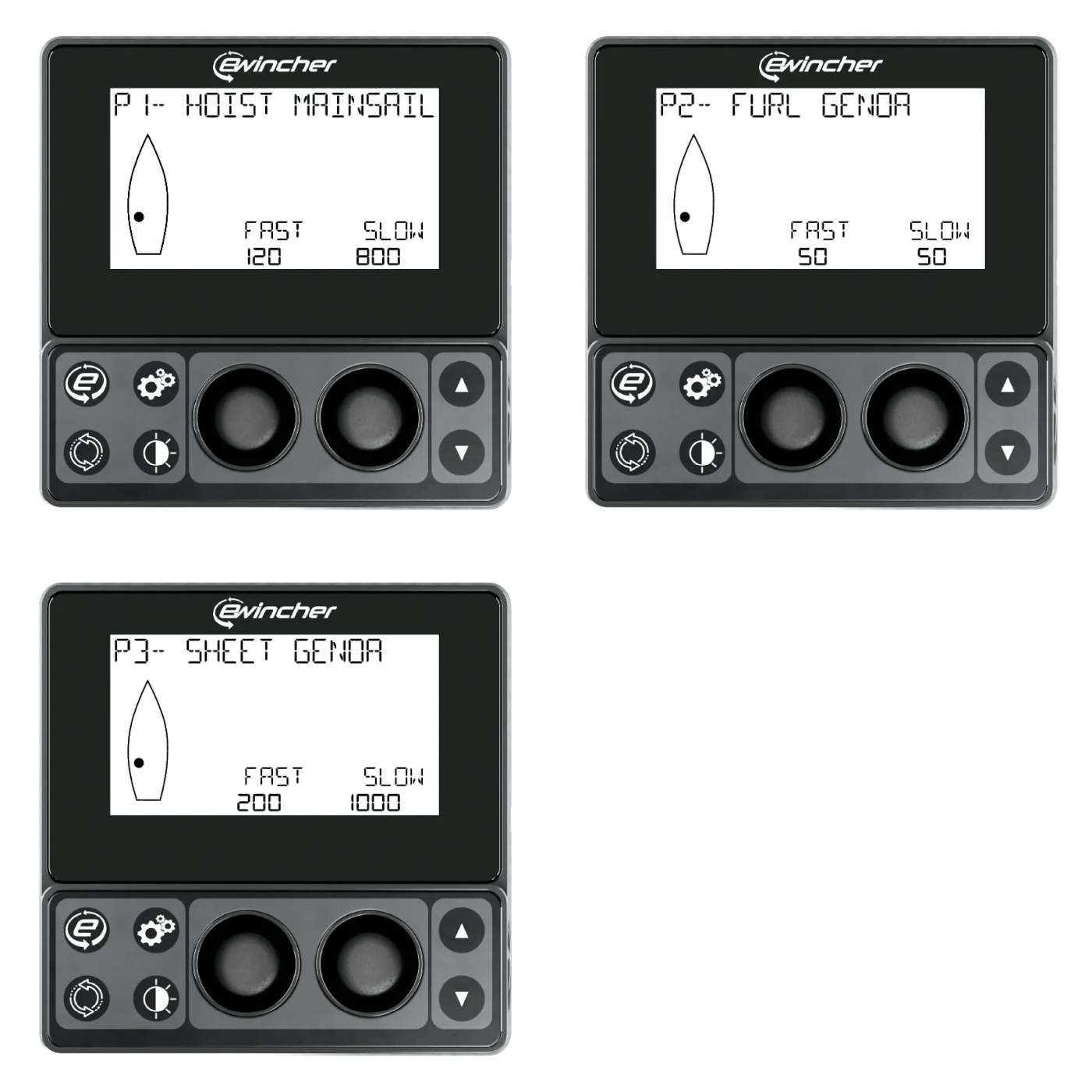
A couple of weeks ago I wrote, or maybe ranted is more accurate, about the lack of kill switches on boats equipped with electric winches.
And I have long bemoaned that electric boat winches and roller furling systems don’t have any overload protection.
The way I see it, the marine industry foists machines on us that can, with just a moment’s inattention, destroy thousands of dollars worth of gear, and, for an added bonus, cripple the yacht or, worse yet, a crew member.
But now, one of my favourite companies is doing something about this:
Good article, John. One question I had on first reading the website information (and still have) is whether the SailForce Hutton winches actually are a good value. Certainly they are priced competitively with electric winches from Harken or Lewmar, but I’m completely unfamiliar with Hutton winches in any form, so I’d really appreciate any relevant insights from those with more knowledge of and experience with Hutton winches and their quality, durability, serviceability, etc.
Hi Mark,
Good point. I will also be interested if anyone comes up on that. One thought: if in doubt buy Harken and the kit. I have Harken winches on the J/109 (older model) and can vouch for them.
I’m also a general Harken fan-boy, having used their gear for over 45 years without any issues.
Hutton winches are not terribly common where I live, but something like 70% of the Australian fleet use them. They trace their lineage back to the mid 1960s Barlow winches, and maintain a general reputation for reliable robustness and ease of maintenance; Hutton eschews plastic components and other common cost-reduction measures in favour of using solid cast or machined metal for absolutely everything. I’d have no more qualms about specifying them than I would about specifying Andersen or Ronstan.
Hi John- I have been considering adding electric primaries on my C&C 34+ for a few months now. I sail and race single handed most of the time, and at 72, I sometimes run out of arm power by the end of a race. My research led me to the Sailforce winches and your article couldn’t be more timely, as I have a quote for a complete system sitting on my desktop waiting to make a final decision. I tried to use the eWincher2 for tacking last summer and found it to be more challenging than I expected. It really didn’t make things much easier, given that I had to switch it from side to side for each tack and get the rotation reversal right each time to switch modes. It worked, but didn’t make life much easier. I love it for halyards, but not for the genoa. I think the Sailforce is likely to extend my racing years significantly. The only thing holding me back on the purchase is whether it is too far on the bleeding edge, given that I have not found a single person using these winches in the way I plan. But like you, I have confidence in the company’s engineers. I just wish I wasn’t going to be the first person to actually install a set in the US, which seems to be the case.
Hi David,
Yes, I can see that the Ewincher might not work that well for sheeting while racing. In fact I don’t use mine for the jib sheets on the J/109 although I did on the M&R 56.
And I totally hear you on the worry of buying something this new. One thought. Assuming you are replacing winches, how about going Harken and the Sailforce kit, then if it all goes wrong with Sailforce (unlikely I think) you could just buy the Harken motor kits? A nasty expense, but not as bad as total replacement.
You also might want to write to Ewincher and see if you are indeed the first in NA if they would cut you an even better deal in exchange for writing your experience up for them.
The “original sin” of powered sailboat winches is starting with a manual winch and putting a motor on it. Instead, if they’re going to make something safe they need to start with an industrial winch with all the safety components and work backwards from that. Yes this may require altering the running rigging.
https://industrialwinch.com/resources/img/options/drum_guard.png
Hi Jordan,
The pic you link to is a “captive winch”. They were used on boats, like for wire halyards back in the day. Unpleasant to use and very dangerous. Disappeared when low stretch Kevlar ropes came on the market.
The capstan principle (normal boat winches) is far superior because it lets go instantly when the tail is let go, plus several other benefits. I’ll definitely not allow a captive winch anywhere on my boat unless I learn something new about them. I try to learn every day, so that could happen.
However, there are many other sides to winch safety where commercial winch practices should definitely influence its marine counterparts. It seems as if the topic of this article is just that?
Captive reel winches have their place. There are a lot of applications where they make sense. (Cranes, for example.) Harken and others make them for megayacht use, where expensive automation reduces the need for even-more-expensive crew. Aboard the kind of sailboats most of us cruise aboard, though, they’ve fallen out of favour for numerous good reasons, and won’t be coming back.
My point is open drum winches necessarily are entrapment risks because people have to interact with the drum.
Maybe you could have a winch where you put the line in a tailer and then have to close a cage over it before the motor engages.
But the problem is fundementally that they put a motor on a winch designed for manual grinding without considering the safety implications. With a manual winch if something gets caught you stop grinding.
People have lost fingers in coffee-grinder powered winches.
Also theres really no such thing as an open electrical switch on the weather deck because the moment some water gets in it’s no longer open.
The hand drill style handles carry less risk because you can pull them off the winch in an emergency. Maybe powered winches should have mechanical clutch levers you have to stand on to engage the motor.
In any case a vendor saying “you totally could rig up your own emergency cutoff on your own” really isn’t acceptable.
You can’t count on it letting go if you pull off the tail because it won’t let go as soon as the coils capsize on the drum which happens immediately after something gets entrapped.
Hi Jordan,
I agree, of course. There are several serious issues with powered winches on boats, as it’s done now. The most scary one in my mind, is if it keeps going on its own, as in the recent fatality. It’s obviously also a problem that relatively fast rotating machinery is unshielded close us.
I think the reason we accept this is that we’re just used to it. If car traffic was introduced as a new thing right now, it would obviously be forbidden everywhere immediately.
I think the drive system described in this article is a significant improvement. A kill switch that is easily reached is essential. The E-wincher is great, since we can just let go of the handle if something was to go wrong. This field will improve. I’m not sure how to implement your suggestion about covers, but I think you could be onto something.
On the website they say that their conversion kits cannot be sold in Germany, the UK, France or Italy. And idea why that is?
Hi Krist,
I did not notice that. I will check.
Hi Krist,
I heard back from Ewincher. The issue is that Harken have 18 months remaining on a patent on electric drive of their winches in those countries only. When that expires SailForce upgrade kits will become available in those countries.
My guess, given the countries involved, is that this patent goes back to when the winches were made by Barbarosa, an Italian company that Harken bought.