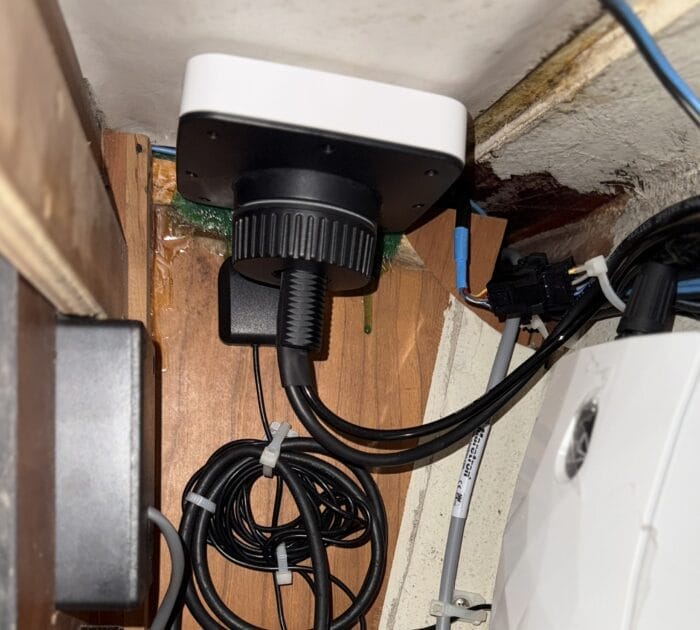
A couple of weeks ago we started this review with a look at the Orca architecture and the Orca display (Part 1).
At that time I figured I could cover Orca Core and the Orca app in one article. How wrong I was. When I got stuck in analyzing Core and writing about all the useful things we can do with this little box of tricks, I ended up writing two parts on Core alone:
- What it is, installation and configuration—super easy, but also really worth writing about for just that reason.
- Capabilities and uses—I’m amazed by all the different things this little box can do for us, some that are not obvious at first glance.
So let’s start with the former, and we will publish the latter in just a few days since the two are so closely related.
The other reason I’m willing to put all this work into reviewing Orca is that I’m getting incredibly positive feedback from my contact at Orca, so I think that we here at AAC, including you members who comment, can make a real difference to the future of this money saving product by pointing out things that are not quite done right yet.
Let’s dig in:
I assume that since you have to swing it, it’s a fluxgate compass? That limits the usefulness of the system on a steel boat.
Hi Jordan,
Sure, we could hardly expect a GPS compass, together with everything else for US$595. GPS compasses seem to run around US$1500 from pretty much all vendors.
Would it work on an aluminium boat? The GPS is out of question, as reception down below is crappy to non-existant, but would the compass perform?
Hi Radu,
Sure the compass will be fine on an aluminium boat. You can also mount it on deck to get GPS, but then, or course, that’s not optimal for the compass.
A quick note on your “calibrate to what?” question:
You pretty much nailed it later with “a professional race navigator who will … tweak before the start of every race.” The (re)calibration is generally against the boat’s own calibration history, so it is intended to compensate for things like a dirty bottom, changes in the wind speed instruments over time, sail wear and tear or a replacement sail that is nominally the same as the old one, etc. Really high-end race programs may also have computational models that are being used in a back-and-forth iteration between the model and measured results. Anyway, if you ever want to read interesting posts by a guy who constantly preaches about the necessity of accurate calibration and who works with the kind of race processor/autopilot systems where the users consider B&G’s H5000 to be unacceptably low-performance, find dreamingwet’s posts on Sailing Anarchy. If nothing else, his frank opinions on B&G equipment and the reasons behind them are of some use to non-racers.
Hi Mark,
So true. For those interested in the steps to just basic calibration this is a good article: https://www.blur.se/2019/03/23/bg-h5000-calibration/
That said, I also had some in depth communication with a B&G expert in Europe, and if we really want to get a H5000 properly sorted there is way more to it than that. And don’t get me started on the pain involved in loading and/or updating the polars in the H5000!
Put it all together and Orca delivers 90% of the result for 10% of the aggravation!
oh lordy the BnG polar- goddam what a pain in the butt.
Your report matches our experience! We can actually enjoy a proper calibrated system thanks to Orca, in a way that is a lot less painful than other systems, it’s really a great quality of life aspect. The compass and GPS are excellent too. Plus everything you haven’t talked about yet, but I’ll wait for your next article to comment.
Hi Edouard,
Thanks for the confirmation that it worked for you. And thanks for holding off too.
With out opening the whole debate of Wind Over Water vs Wind Over Ground, do you know if the CORE will calculate True Wind based on SOG if STW is not available? (Most cruising boats I go aboard do not have a functioning paddle wheel)
Hi Carl,
I don’t know for sure, but would guess the answer is no. For true wind to be really accurate we need speed through the water. I was interested in to see that Orca, in their help files, encourage the use of ultra sonic boat speed sensors.
Does the Orca Core only support a simple toggling on and off of data sources, or is there some provision for a priority queue, loss and recovery? For example, if you have configured the Core to use your B&G compass to put heading data on the network and then that compass stops transmitting heading data, is there then no heading data on the network, or is there some provision in the Core to fall back to a lower priority heading data source after a timeout has expired (and hopefully recover to use the higher priority source if it comes back online and starts transmitting again)?
Hi Mark,
Good question. There is no priority per sec. The way it works is that you just select a source, but my guess is that they switch to any other available source in the case of a failure. Not sure if they would switch back. I will ask.
There’s a good reference book on calibration of instruments. Mastering Data To Win – Fernhurst Books
It’s aimed at serious racers so it may be for cruisers it just gives you the message not to go too far with polars and windspeed as both depend so much on the conditions and point of sail. But it is full of good tips and and to use the data and what to watch for.
Hi Stanley,
Wow, I took a quick look. Looks like a great resource. If I was still racing I would be all over it, thanks.
This emphasis on easy calibration is, I think, very important.
People tend to forget that sensors almost never output the thing you actually want.
A wind speed anemometer does not output a wind speed value. It produces a string of pulses whose frequency is, in some nonlinear way, correlated with wind speed.
A depth sounder does not output depth. It produces a complicated-looking analog waveform whose intensity as a function of time depends on the depth and contrast of every feature in view below the boat.
None of that data – or the data from any other kind of sensor – is meaningful without calibration. Scientists who work with instrumentation spend an inordinate amount of time and effort on ensuring accurate, traceable, thoroughly cross-checked calibrations are in place for everything in their system.
Orca is to be commended for understanding that, and for putting serious effort into automating as much of it as possible.
gotta highlight your comment on the documentation of BnG calibration. IT IS TERRIBLE. BnG should be ashamed.
Hi Robert,
So true on both. I think this reflects the changes in culture that came when first Navico bought B&G and the Brunswick bought Navico. End result: no one left who gives a damn.
Hi John
Does this mean that with the Core 2 you don”t need an Ipad with an internal GPS and SIM card port – a further saving if one doesn’t go for the Orca Display yet ?
Hi Mark,
Yes, you’re right. And even if your iPad (tablet, phone or whatever) does have an internal GPS, you shouldn’t use it. The one in the Core is far more accurate and reliable.
Hi Mark,
Yes, that’s right. That said, at the moment you are restricted to using the Orca app if you want to get that information directly from Core over wifi. I will be writing more about the app in Part 4, and a work around.